Section 13 notice: a comprehensive guide for landlords, letting agents and BTR operators
Best Practices & Trends
Published by
PriceHubble
-
10 Sept 2026

Section 13 notice: a comprehensive guide for landlords, letting agents and BTR operators
Best Practices & Trends
Published by
PriceHubble
-
10 Sept 2026
Section 13 notice: a comprehensive guide for landlords, letting agents and BTR operators
Best Practices & Trends
Published by
PriceHubble
-
10 Sept 2026
Whether you're a landlord with one buy-to-let, a letting agent managing a book of tenancies, or an asset manager running a Build-to-Rent portfolio, the Section 13 notice has just become the only route to a rent review in the private rented sector. Since the Renters' Rights Act 2025 took effect, it is the sole lawful mechanism for reviewing rent on a periodic tenancy: a statutory notice under the Housing Act 1988, served on a prescribed form, giving at least two months' notice, with the proposed new rent judged against the local market rate.
For every property professional, that last point is where the real work now sits. Get the form and the notice period right and a Section 13 notice is a formality. Get the evidence behind the proposed new rent wrong, and you are looking at a First-tier Tribunal hearing, a delayed process and a tenant who no longer trusts how their rent was set.
This guide walks through what landlords, letting agents and BTR operators each need to get right, with a focus on the part regulatory compliance actually hinges on: grounding the figure in solid market evidence.
Whether you're a landlord with one buy-to-let, a letting agent managing a book of tenancies, or an asset manager running a Build-to-Rent portfolio, the Section 13 notice has just become the only route to a rent review in the private rented sector. Since the Renters' Rights Act 2025 took effect, it is the sole lawful mechanism for reviewing rent on a periodic tenancy: a statutory notice under the Housing Act 1988, served on a prescribed form, giving at least two months' notice, with the proposed new rent judged against the local market rate.
For every property professional, that last point is where the real work now sits. Get the form and the notice period right and a Section 13 notice is a formality. Get the evidence behind the proposed new rent wrong, and you are looking at a First-tier Tribunal hearing, a delayed process and a tenant who no longer trusts how their rent was set.
This guide walks through what landlords, letting agents and BTR operators each need to get right, with a focus on the part regulatory compliance actually hinges on: grounding the figure in solid market evidence.
Whether you're a landlord with one buy-to-let, a letting agent managing a book of tenancies, or an asset manager running a Build-to-Rent portfolio, the Section 13 notice has just become the only route to a rent review in the private rented sector. Since the Renters' Rights Act 2025 took effect, it is the sole lawful mechanism for reviewing rent on a periodic tenancy: a statutory notice under the Housing Act 1988, served on a prescribed form, giving at least two months' notice, with the proposed new rent judged against the local market rate.
For every property professional, that last point is where the real work now sits. Get the form and the notice period right and a Section 13 notice is a formality. Get the evidence behind the proposed new rent wrong, and you are looking at a First-tier Tribunal hearing, a delayed process and a tenant who no longer trusts how their rent was set.
This guide walks through what landlords, letting agents and BTR operators each need to get right, with a focus on the part regulatory compliance actually hinges on: grounding the figure in solid market evidence.
Research
How pricing signals will evolve under Renters' Rights
Research
How pricing signals will evolve under Renters' Rights
What is a Section 13 notice?
A Section 13 notice, formally called the landlord’s notice proposing a new rent, is one of a family of statutory notices set out in the Housing Act 1988. It is the legal instrument that lets a landlord move the rent on assured periodic tenancies from the current rent to a new figure, without needing the tenant’s agreement.
Before the Renters’ Rights Act, many landlords and letting agents avoided Section 13 altogether. A rent review clause written into the tenancy agreement, or a fixed-term tenancy renewal at a higher figure, did the job informally and faster than a formal notice, with little justification required.
That flexibility is gone. Fixed-term tenancies and assured shorthold tenancies, in the form the sector knew them, no longer exist for new lettings, and every existing tenancy has converted to a periodic assured tenancy. A rent review clause in a tenancy agreement now carries no legal weight. Section 13 is the only door.
What is a Section 13 notice?
A Section 13 notice, formally called the landlord’s notice proposing a new rent, is one of a family of statutory notices set out in the Housing Act 1988. It is the legal instrument that lets a landlord move the rent on assured periodic tenancies from the current rent to a new figure, without needing the tenant’s agreement.
Before the Renters’ Rights Act, many landlords and letting agents avoided Section 13 altogether. A rent review clause written into the tenancy agreement, or a fixed-term tenancy renewal at a higher figure, did the job informally and faster than a formal notice, with little justification required.
That flexibility is gone. Fixed-term tenancies and assured shorthold tenancies, in the form the sector knew them, no longer exist for new lettings, and every existing tenancy has converted to a periodic assured tenancy. A rent review clause in a tenancy agreement now carries no legal weight. Section 13 is the only door.
What is a Section 13 notice?
A Section 13 notice, formally called the landlord’s notice proposing a new rent, is one of a family of statutory notices set out in the Housing Act 1988. It is the legal instrument that lets a landlord move the rent on assured periodic tenancies from the current rent to a new figure, without needing the tenant’s agreement.
Before the Renters’ Rights Act, many landlords and letting agents avoided Section 13 altogether. A rent review clause written into the tenancy agreement, or a fixed-term tenancy renewal at a higher figure, did the job informally and faster than a formal notice, with little justification required.
That flexibility is gone. Fixed-term tenancies and assured shorthold tenancies, in the form the sector knew them, no longer exist for new lettings, and every existing tenancy has converted to a periodic assured tenancy. A rent review clause in a tenancy agreement now carries no legal weight. Section 13 is the only door.
Why the Renters’ Rights Act changed the rules
Section 13 sits inside a much wider reform. The Renters’ Rights Act 2025 also ended Section 21 no-fault evictions, banned bidding wars on asking rents, capped rent in advance at one month once a tenancy agreement is signed, and introduced a private rented sector ombudsman with stronger council enforcement powers behind it. Together, these changes push the sector towards more transparency and more paperwork, and Section 13 is where that shows up most often, since it is the process every landlord now has to use, every year, for every tenancy. For the fuller picture of what changed across evictions, deposits and enforcement, see our overview of the Renters’ Rights Act’s impact on the private rented sector.
Three changes matter most for how you approach a rent increase specifically.
First, all tenancies are periodic: there is no fixed-term tenancy to renegotiate at renewal, and assured shorthold tenancies as a distinct category have effectively disappeared for private lettings. Every assured periodic tenancy, and every periodic assured tenancy that existed before the Act, now runs on rolling terms with rent reviewed through Section 13.
Second, contractual routes are void. Any rent review clause in a tenancy agreement, however carefully drafted, has no effect, and landlords cannot raise rent by referring back to an indexation formula agreed at the start of the tenancy.
Third, the tribunal can no longer push rent above what the landlord asked for. If a tenant challenges the proposed new rent, the First-tier Tribunal sets it at the lower of your proposed figure and the open market rent it assesses. That protects tenants from opportunistic increases, and it means there is no upside to overreaching on the number: get it right the first time.
Who has to serve a Section 13 notice?
Any landlord, private or institutional, who wants to increase rent on an assured periodic tenancy has to go through Section 13. That covers private landlords with a single buy-to-let, portfolio landlords, and Build-to-Rent operators managing schemes with hundreds of units.
In practice, most notices are served by letting agents and estate agents acting on the landlord’s behalf, and that division of labour makes sense: serving notice correctly means getting the form, the dates and the rent figure right in one go, and an agent managing a large portfolio can build the process into a repeatable workflow. Whoever serves it, the landlord remains responsible for compliance, so it is worth agreeing with your agent, in writing, exactly how each notice will be evidenced. BTR operators sit somewhere in between: many run the process in-house, but the same discipline applies, usually at a larger scale and with more internal governance to satisfy.
Choosing the right prescribed form: Form 4, Form 4A and Form 5
A Section 13 notice only works if it is served on the correct prescribed form. Using the wrong one, or missing information from it, is one of the most common reasons a notice fails.
Form 4A is the form to use for a private rented sector tenancy since the Renters’ Rights Act took effect. It is the current landlord’s notice proposing a new rent for an assured periodic tenancy, and it needs the tenant’s details, the current rent, the proposed new rent and the date the increase is meant to start.
Form 4 still exists, but it now applies to social housing tenancies rather than private lettings, so double-check which one your software or template defaults to.
Agricultural tenancies follow a parallel track. Form 5 is the equivalent notice for an assured agricultural occupancy, used when a landlord or licensor wants to propose a new rent or licence fee under that arrangement. If your portfolio includes any agricultural occupancies alongside standard residential lettings, make sure your team knows the two forms are not interchangeable.
Why the Renters’ Rights Act changed the rules
Section 13 sits inside a much wider reform. The Renters’ Rights Act 2025 also ended Section 21 no-fault evictions, banned bidding wars on asking rents, capped rent in advance at one month once a tenancy agreement is signed, and introduced a private rented sector ombudsman with stronger council enforcement powers behind it. Together, these changes push the sector towards more transparency and more paperwork, and Section 13 is where that shows up most often, since it is the process every landlord now has to use, every year, for every tenancy. For the fuller picture of what changed across evictions, deposits and enforcement, see our overview of the Renters’ Rights Act’s impact on the private rented sector.
Three changes matter most for how you approach a rent increase specifically.
First, all tenancies are periodic: there is no fixed-term tenancy to renegotiate at renewal, and assured shorthold tenancies as a distinct category have effectively disappeared for private lettings. Every assured periodic tenancy, and every periodic assured tenancy that existed before the Act, now runs on rolling terms with rent reviewed through Section 13.
Second, contractual routes are void. Any rent review clause in a tenancy agreement, however carefully drafted, has no effect, and landlords cannot raise rent by referring back to an indexation formula agreed at the start of the tenancy.
Third, the tribunal can no longer push rent above what the landlord asked for. If a tenant challenges the proposed new rent, the First-tier Tribunal sets it at the lower of your proposed figure and the open market rent it assesses. That protects tenants from opportunistic increases, and it means there is no upside to overreaching on the number: get it right the first time.
Who has to serve a Section 13 notice?
Any landlord, private or institutional, who wants to increase rent on an assured periodic tenancy has to go through Section 13. That covers private landlords with a single buy-to-let, portfolio landlords, and Build-to-Rent operators managing schemes with hundreds of units.
In practice, most notices are served by letting agents and estate agents acting on the landlord’s behalf, and that division of labour makes sense: serving notice correctly means getting the form, the dates and the rent figure right in one go, and an agent managing a large portfolio can build the process into a repeatable workflow. Whoever serves it, the landlord remains responsible for compliance, so it is worth agreeing with your agent, in writing, exactly how each notice will be evidenced. BTR operators sit somewhere in between: many run the process in-house, but the same discipline applies, usually at a larger scale and with more internal governance to satisfy.
Choosing the right prescribed form: Form 4, Form 4A and Form 5
A Section 13 notice only works if it is served on the correct prescribed form. Using the wrong one, or missing information from it, is one of the most common reasons a notice fails.
Form 4A is the form to use for a private rented sector tenancy since the Renters’ Rights Act took effect. It is the current landlord’s notice proposing a new rent for an assured periodic tenancy, and it needs the tenant’s details, the current rent, the proposed new rent and the date the increase is meant to start.
Form 4 still exists, but it now applies to social housing tenancies rather than private lettings, so double-check which one your software or template defaults to.
Agricultural tenancies follow a parallel track. Form 5 is the equivalent notice for an assured agricultural occupancy, used when a landlord or licensor wants to propose a new rent or licence fee under that arrangement. If your portfolio includes any agricultural occupancies alongside standard residential lettings, make sure your team knows the two forms are not interchangeable.
Why the Renters’ Rights Act changed the rules
Section 13 sits inside a much wider reform. The Renters’ Rights Act 2025 also ended Section 21 no-fault evictions, banned bidding wars on asking rents, capped rent in advance at one month once a tenancy agreement is signed, and introduced a private rented sector ombudsman with stronger council enforcement powers behind it. Together, these changes push the sector towards more transparency and more paperwork, and Section 13 is where that shows up most often, since it is the process every landlord now has to use, every year, for every tenancy. For the fuller picture of what changed across evictions, deposits and enforcement, see our overview of the Renters’ Rights Act’s impact on the private rented sector.
Three changes matter most for how you approach a rent increase specifically.
First, all tenancies are periodic: there is no fixed-term tenancy to renegotiate at renewal, and assured shorthold tenancies as a distinct category have effectively disappeared for private lettings. Every assured periodic tenancy, and every periodic assured tenancy that existed before the Act, now runs on rolling terms with rent reviewed through Section 13.
Second, contractual routes are void. Any rent review clause in a tenancy agreement, however carefully drafted, has no effect, and landlords cannot raise rent by referring back to an indexation formula agreed at the start of the tenancy.
Third, the tribunal can no longer push rent above what the landlord asked for. If a tenant challenges the proposed new rent, the First-tier Tribunal sets it at the lower of your proposed figure and the open market rent it assesses. That protects tenants from opportunistic increases, and it means there is no upside to overreaching on the number: get it right the first time.
Who has to serve a Section 13 notice?
Any landlord, private or institutional, who wants to increase rent on an assured periodic tenancy has to go through Section 13. That covers private landlords with a single buy-to-let, portfolio landlords, and Build-to-Rent operators managing schemes with hundreds of units.
In practice, most notices are served by letting agents and estate agents acting on the landlord’s behalf, and that division of labour makes sense: serving notice correctly means getting the form, the dates and the rent figure right in one go, and an agent managing a large portfolio can build the process into a repeatable workflow. Whoever serves it, the landlord remains responsible for compliance, so it is worth agreeing with your agent, in writing, exactly how each notice will be evidenced. BTR operators sit somewhere in between: many run the process in-house, but the same discipline applies, usually at a larger scale and with more internal governance to satisfy.
Choosing the right prescribed form: Form 4, Form 4A and Form 5
A Section 13 notice only works if it is served on the correct prescribed form. Using the wrong one, or missing information from it, is one of the most common reasons a notice fails.
Form 4A is the form to use for a private rented sector tenancy since the Renters’ Rights Act took effect. It is the current landlord’s notice proposing a new rent for an assured periodic tenancy, and it needs the tenant’s details, the current rent, the proposed new rent and the date the increase is meant to start.
Form 4 still exists, but it now applies to social housing tenancies rather than private lettings, so double-check which one your software or template defaults to.
Agricultural tenancies follow a parallel track. Form 5 is the equivalent notice for an assured agricultural occupancy, used when a landlord or licensor wants to propose a new rent or licence fee under that arrangement. If your portfolio includes any agricultural occupancies alongside standard residential lettings, make sure your team knows the two forms are not interchangeable.
Getting the notice period right: two months, every time
The notice period for a Section 13 notice is fixed: landlords must give tenants at least two months’ notice before a rent increase takes effect. The clock starts when the notice is validly served, not when it is dated, so serving notice by a method you can evidence, recorded post, a certified email, or through your lettings software, matters more than it used to.
Two other timing rules sit alongside the notice period. A rent increase cannot take effect within the first year of a tenancy, and rent can only be increased once every twelve months after that, even if the landlord changes and the tenancy continues. Diarise both dates when you serve a notice: getting the timing wrong invalidates the process and forces you to start again.
It is also worth using the notice period productively with tenants. Once a new rent is confirmed, remind them to update their standing order to the new amount before the first payment date, and flag, gently, that council tax is billed and reviewed separately, so the rent increase has no bearing on it. Small administrative points, but they head off a lot of first-month confusion, for landlords managing their own tenancies and for letting agents fielding the calls on their behalf.
How to set a proposed new rent that will hold up
This is where regulatory compliance really lives. The proposed new rent on your Section 13 notice has to reflect market rate: what a similar property would achieve if it were let today on the open market. A round-number increase, or simply matching what a neighbouring landlord charges, will not survive scrutiny if a tenant challenges it.
“Market rate” under the Act means open market rent: the rent a landlord could reasonably expect from a new letting of the same property, in its current condition, in the current market. That is a specific, evidenced figure, not a general sense of where rents are heading locally, and the ban on bidding wars makes it harder to read that figure off the market than it used to be.
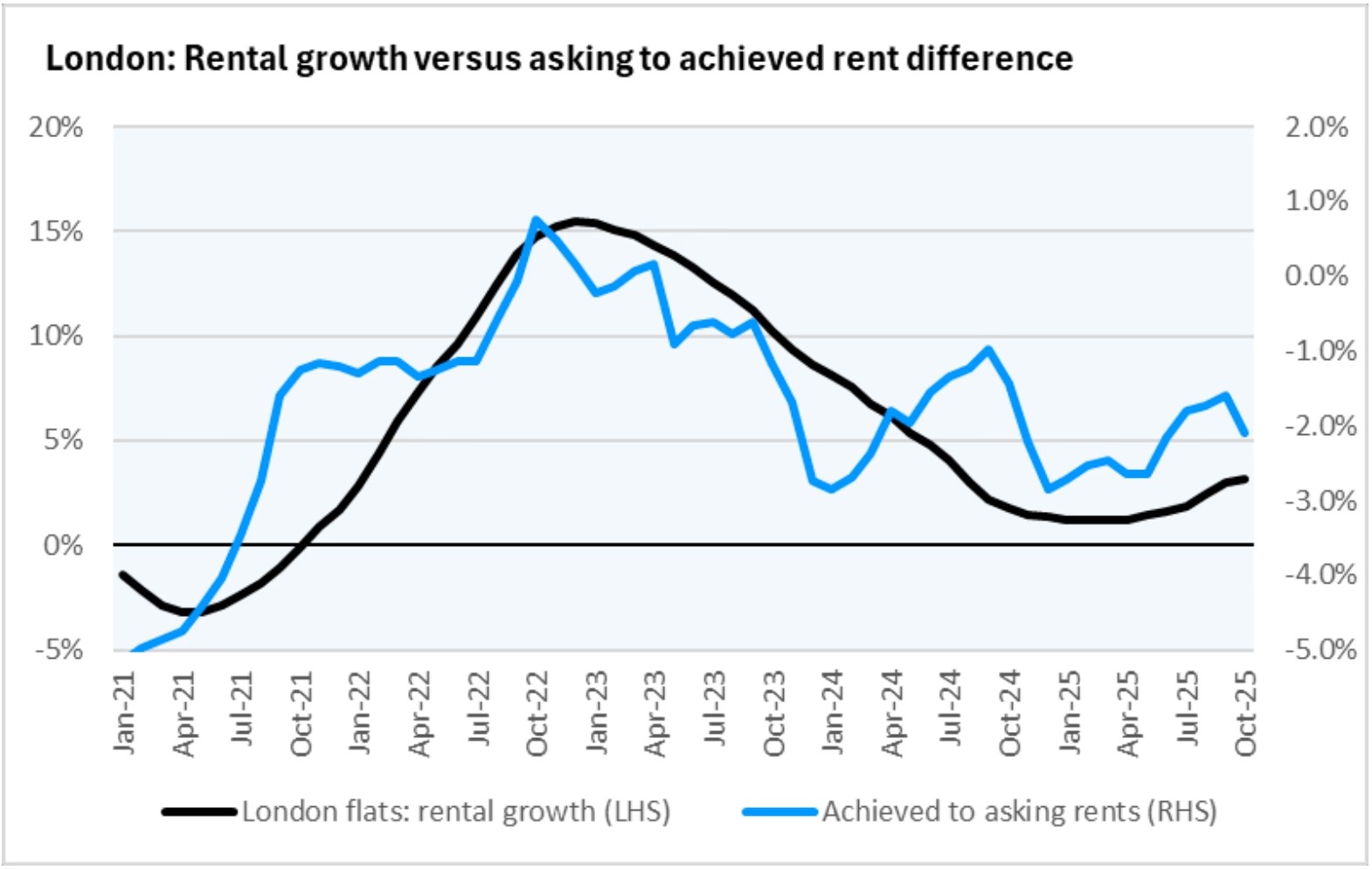
Our own rental data shows why: in London, the gap between asking and achieved rents has averaged a 1.8 per cent discount over the past five years, but that gap moves with the cycle, widening past 5 per cent during weak demand in the pandemic and flipping to a 0.8 per cent premium at the peak of the market in 2022, when roughly one in three tenancies let above the advertised asking rent rather than the longer-run average of one in five.
With bidding wars now banned, asking rents themselves are likely to drift up slightly as landlords build that premium into the headline figure instead, which makes comparable, current, local evidence even more important than a snapshot of last year’s asking prices.
If the tenant disagrees: the First-tier Tribunal
A tenant who receives a Section 13 notice does not have to accept it. They can negotiate directly with the landlord or letting agent, or apply to the First-tier Tribunal to have the rent determined independently.
The tribunal assesses the property against comparable local lettings and sets the rent at market value, but, as noted above, it cannot set a figure higher than the one proposed. It also cannot backdate the increase to the original notice date, so a delay usually works against the landlord, not the tenant. Applying is inexpensive for tenants, so do not assume a weak notice will go unchallenged simply because the numbers involved are modest.
The practical implication is straightforward: a well-evidenced proposed new rent removes most of the incentive for a tenant to escalate, and puts you in a stronger position in any hearing that does happen.
A compliance checklist for landlords, letting agents and BTR operators
Before serving notice on any tenancy, it is worth working through a short list:
Confirm the tenancy is an assured periodic tenancy and that at least twelve months have passed since it started, or since the last increase.
Use the correct prescribed form: Form 4A for a private rented sector residential tenancy, Form 5 for an assured agricultural occupancy.
Set the proposed new rent against current, local, comparable evidence rather than an assumed percentage rise.
Serve notice with at least two months’ notice before the new rent is due to start, and keep proof of how and when it was served.
Brief tenants on the practical follow-up: updating their standing order, and confirming that council tax is unaffected by the change.
Keep a record of the evidence behind the figure. If the tenant applies to the tribunal, that record is what your case rests on.
Letting agents managing several landlords, and BTR operators overseeing a portfolio, benefit most from turning this into a standard workflow rather than a case-by-case judgement call. The statutory notices themselves are simple documents; the discipline is in the evidence trail behind them.

Why rent evidence matters more than ever
The Renters’ Rights Act has narrowed the path for landlords, BTR operators and letting agents to one process, applied one standard, and given the tribunal the final say when there is a dispute. Consensus forecasts still point to average rental growth of around 3 per cent a year over the next few years, but local conditions vary widely, and in that environment the quality of the data behind a rent increase is no longer a nice-to-have. It is the difference between a notice that stands and one that gets picked apart.
At PriceHubble, we built the Rental Evidence reports, available in Market Analyser and Dataloft, around exactly this problem. The new feature allows you to compile asking and achieved rents for comparable properties by type, bedroom count and local area, the annual change in rent paid, and where a specific property sits within the local range, anchored to a postcode and adjustable by geography and time period, with sample sizes shown so you know how much weight the evidence can carry. Reports export in a few clicks, ready to sit alongside a Section 13 notice or an internal approval.
The feature was built with all three audiences in mind:
BTR operators use it for portfolio-wide rent benchmarking and to satisfy internal governance;
Letting agents and estate agents use it to give landlord clients evidence-based advice on rent reviews and renewals;
Landlords use it simply to check that a proposed rent stays aligned with what the local market actually supports. In each case, the goal is the same: a rent increase that reflects real local data, not a guess, so it holds up whether or not a tenant ever challenges it.
The bottom line: rent evidence is key to compliant Section 13 notice processes
Section 13 rent increase notices are now the only compliant way to raise rent on a private tenancy in England, and the rules leave very little room for shortcuts. Use the right prescribed form, respect the notice period, and make sure the proposed new rent is backed by genuine local market rate evidence rather than a guess. Landlords, letting agents and BTR operators who build that evidence into their process from the start will spend a lot less time in front of a tribunal, and a lot more time running their tenancies and portfolios with confidence.
Getting the notice period right: two months, every time
The notice period for a Section 13 notice is fixed: landlords must give tenants at least two months’ notice before a rent increase takes effect. The clock starts when the notice is validly served, not when it is dated, so serving notice by a method you can evidence, recorded post, a certified email, or through your lettings software, matters more than it used to.
Two other timing rules sit alongside the notice period. A rent increase cannot take effect within the first year of a tenancy, and rent can only be increased once every twelve months after that, even if the landlord changes and the tenancy continues. Diarise both dates when you serve a notice: getting the timing wrong invalidates the process and forces you to start again.
It is also worth using the notice period productively with tenants. Once a new rent is confirmed, remind them to update their standing order to the new amount before the first payment date, and flag, gently, that council tax is billed and reviewed separately, so the rent increase has no bearing on it. Small administrative points, but they head off a lot of first-month confusion, for landlords managing their own tenancies and for letting agents fielding the calls on their behalf.
How to set a proposed new rent that will hold up
This is where regulatory compliance really lives. The proposed new rent on your Section 13 notice has to reflect market rate: what a similar property would achieve if it were let today on the open market. A round-number increase, or simply matching what a neighbouring landlord charges, will not survive scrutiny if a tenant challenges it.
“Market rate” under the Act means open market rent: the rent a landlord could reasonably expect from a new letting of the same property, in its current condition, in the current market. That is a specific, evidenced figure, not a general sense of where rents are heading locally, and the ban on bidding wars makes it harder to read that figure off the market than it used to be.
Our own rental data shows why: in London, the gap between asking and achieved rents has averaged a 1.8 per cent discount over the past five years, but that gap moves with the cycle, widening past 5 per cent during weak demand in the pandemic and flipping to a 0.8 per cent premium at the peak of the market in 2022, when roughly one in three tenancies let above the advertised asking rent rather than the longer-run average of one in five.
With bidding wars now banned, asking rents themselves are likely to drift up slightly as landlords build that premium into the headline figure instead, which makes comparable, current, local evidence even more important than a snapshot of last year’s asking prices.
If the tenant disagrees: the First-tier Tribunal
A tenant who receives a Section 13 notice does not have to accept it. They can negotiate directly with the landlord or letting agent, or apply to the First-tier Tribunal to have the rent determined independently.
The tribunal assesses the property against comparable local lettings and sets the rent at market value, but, as noted above, it cannot set a figure higher than the one proposed. It also cannot backdate the increase to the original notice date, so a delay usually works against the landlord, not the tenant. Applying is inexpensive for tenants, so do not assume a weak notice will go unchallenged simply because the numbers involved are modest.
The practical implication is straightforward: a well-evidenced proposed new rent removes most of the incentive for a tenant to escalate, and puts you in a stronger position in any hearing that does happen.
A compliance checklist for landlords, letting agents and BTR operators
Before serving notice on any tenancy, it is worth working through a short list:
Confirm the tenancy is an assured periodic tenancy and that at least twelve months have passed since it started, or since the last increase.
Use the correct prescribed form: Form 4A for a private rented sector residential tenancy, Form 5 for an assured agricultural occupancy.
Set the proposed new rent against current, local, comparable evidence rather than an assumed percentage rise.
Serve notice with at least two months’ notice before the new rent is due to start, and keep proof of how and when it was served.
Brief tenants on the practical follow-up: updating their standing order, and confirming that council tax is unaffected by the change.
Keep a record of the evidence behind the figure. If the tenant applies to the tribunal, that record is what your case rests on.
Letting agents managing several landlords, and BTR operators overseeing a portfolio, benefit most from turning this into a standard workflow rather than a case-by-case judgement call. The statutory notices themselves are simple documents; the discipline is in the evidence trail behind them.
Why rent evidence matters more than ever
The Renters’ Rights Act has narrowed the path for landlords, BTR operators and letting agents to one process, applied one standard, and given the tribunal the final say when there is a dispute. Consensus forecasts still point to average rental growth of around 3 per cent a year over the next few years, but local conditions vary widely, and in that environment the quality of the data behind a rent increase is no longer a nice-to-have. It is the difference between a notice that stands and one that gets picked apart.
At PriceHubble, we built the Rental Evidence reports, available in Market Analyser and Dataloft, around exactly this problem. The new feature allows you to compile asking and achieved rents for comparable properties by type, bedroom count and local area, the annual change in rent paid, and where a specific property sits within the local range, anchored to a postcode and adjustable by geography and time period, with sample sizes shown so you know how much weight the evidence can carry. Reports export in a few clicks, ready to sit alongside a Section 13 notice or an internal approval.
The feature was built with all three audiences in mind:
BTR operators use it for portfolio-wide rent benchmarking and to satisfy internal governance;
Letting agents and estate agents use it to give landlord clients evidence-based advice on rent reviews and renewals;
Landlords use it simply to check that a proposed rent stays aligned with what the local market actually supports. In each case, the goal is the same: a rent increase that reflects real local data, not a guess, so it holds up whether or not a tenant ever challenges it.
The bottom line: rent evidence is key to compliant Section 13 notice processes
Section 13 rent increase notices are now the only compliant way to raise rent on a private tenancy in England, and the rules leave very little room for shortcuts. Use the right prescribed form, respect the notice period, and make sure the proposed new rent is backed by genuine local market rate evidence rather than a guess. Landlords, letting agents and BTR operators who build that evidence into their process from the start will spend a lot less time in front of a tribunal, and a lot more time running their tenancies and portfolios with confidence.
Getting the notice period right: two months, every time
The notice period for a Section 13 notice is fixed: landlords must give tenants at least two months’ notice before a rent increase takes effect. The clock starts when the notice is validly served, not when it is dated, so serving notice by a method you can evidence, recorded post, a certified email, or through your lettings software, matters more than it used to.
Two other timing rules sit alongside the notice period. A rent increase cannot take effect within the first year of a tenancy, and rent can only be increased once every twelve months after that, even if the landlord changes and the tenancy continues. Diarise both dates when you serve a notice: getting the timing wrong invalidates the process and forces you to start again.
It is also worth using the notice period productively with tenants. Once a new rent is confirmed, remind them to update their standing order to the new amount before the first payment date, and flag, gently, that council tax is billed and reviewed separately, so the rent increase has no bearing on it. Small administrative points, but they head off a lot of first-month confusion, for landlords managing their own tenancies and for letting agents fielding the calls on their behalf.
How to set a proposed new rent that will hold up
This is where regulatory compliance really lives. The proposed new rent on your Section 13 notice has to reflect market rate: what a similar property would achieve if it were let today on the open market. A round-number increase, or simply matching what a neighbouring landlord charges, will not survive scrutiny if a tenant challenges it.
“Market rate” under the Act means open market rent: the rent a landlord could reasonably expect from a new letting of the same property, in its current condition, in the current market. That is a specific, evidenced figure, not a general sense of where rents are heading locally, and the ban on bidding wars makes it harder to read that figure off the market than it used to be.
Our own rental data shows why: in London, the gap between asking and achieved rents has averaged a 1.8 per cent discount over the past five years, but that gap moves with the cycle, widening past 5 per cent during weak demand in the pandemic and flipping to a 0.8 per cent premium at the peak of the market in 2022, when roughly one in three tenancies let above the advertised asking rent rather than the longer-run average of one in five.
With bidding wars now banned, asking rents themselves are likely to drift up slightly as landlords build that premium into the headline figure instead, which makes comparable, current, local evidence even more important than a snapshot of last year’s asking prices.
If the tenant disagrees: the First-tier Tribunal
A tenant who receives a Section 13 notice does not have to accept it. They can negotiate directly with the landlord or letting agent, or apply to the First-tier Tribunal to have the rent determined independently.
The tribunal assesses the property against comparable local lettings and sets the rent at market value, but, as noted above, it cannot set a figure higher than the one proposed. It also cannot backdate the increase to the original notice date, so a delay usually works against the landlord, not the tenant. Applying is inexpensive for tenants, so do not assume a weak notice will go unchallenged simply because the numbers involved are modest.
The practical implication is straightforward: a well-evidenced proposed new rent removes most of the incentive for a tenant to escalate, and puts you in a stronger position in any hearing that does happen.
A compliance checklist for landlords, letting agents and BTR operators
Before serving notice on any tenancy, it is worth working through a short list:
Confirm the tenancy is an assured periodic tenancy and that at least twelve months have passed since it started, or since the last increase.
Use the correct prescribed form: Form 4A for a private rented sector residential tenancy, Form 5 for an assured agricultural occupancy.
Set the proposed new rent against current, local, comparable evidence rather than an assumed percentage rise.
Serve notice with at least two months’ notice before the new rent is due to start, and keep proof of how and when it was served.
Brief tenants on the practical follow-up: updating their standing order, and confirming that council tax is unaffected by the change.
Keep a record of the evidence behind the figure. If the tenant applies to the tribunal, that record is what your case rests on.
Letting agents managing several landlords, and BTR operators overseeing a portfolio, benefit most from turning this into a standard workflow rather than a case-by-case judgement call. The statutory notices themselves are simple documents; the discipline is in the evidence trail behind them.
Why rent evidence matters more than ever
The Renters’ Rights Act has narrowed the path for landlords, BTR operators and letting agents to one process, applied one standard, and given the tribunal the final say when there is a dispute. Consensus forecasts still point to average rental growth of around 3 per cent a year over the next few years, but local conditions vary widely, and in that environment the quality of the data behind a rent increase is no longer a nice-to-have. It is the difference between a notice that stands and one that gets picked apart.
At PriceHubble, we built the Rental Evidence reports, available in Market Analyser and Dataloft, around exactly this problem. The new feature allows you to compile asking and achieved rents for comparable properties by type, bedroom count and local area, the annual change in rent paid, and where a specific property sits within the local range, anchored to a postcode and adjustable by geography and time period, with sample sizes shown so you know how much weight the evidence can carry. Reports export in a few clicks, ready to sit alongside a Section 13 notice or an internal approval.
The feature was built with all three audiences in mind:
BTR operators use it for portfolio-wide rent benchmarking and to satisfy internal governance;
Letting agents and estate agents use it to give landlord clients evidence-based advice on rent reviews and renewals;
Landlords use it simply to check that a proposed rent stays aligned with what the local market actually supports. In each case, the goal is the same: a rent increase that reflects real local data, not a guess, so it holds up whether or not a tenant ever challenges it.
The bottom line: rent evidence is key to compliant Section 13 notice processes
Section 13 rent increase notices are now the only compliant way to raise rent on a private tenancy in England, and the rules leave very little room for shortcuts. Use the right prescribed form, respect the notice period, and make sure the proposed new rent is backed by genuine local market rate evidence rather than a guess. Landlords, letting agents and BTR operators who build that evidence into their process from the start will spend a lot less time in front of a tribunal, and a lot more time running their tenancies and portfolios with confidence.
Section 13 notices: Frequently asked questions
Can a landlord increase rent without serving a Section 13 notice?
No, not for an assured periodic tenancy in the private rented sector. Since the Renters’ Rights Act 2025, rent review clauses and informal agreements have no legal effect. Section 13 is the only route, and the increase only takes effect once a valid notice has been served correctly.
How much notice does a landlord have to give under Section 13?
At least two months’ notice, running from the date the notice is validly served to the date the new rent is due to start. Rent can also only be increased once every twelve months, so the notice period and the annual limit both need checking together.
What is the difference between Form 4 and Form 4A?
Form 4A is the current form for a private rented sector assured periodic tenancy. Form 4 now applies to social housing tenancies rather than private lettings, so landlords and letting agents in the private rented sector should be using Form 4A.
Can a tenant challenge the rent proposed in a Section 13 notice?
Yes. A tenant can apply to the First-tier Tribunal, which assesses the open market rent for the property using comparable evidence. The tribunal cannot set a rent higher than the figure the landlord proposed, and the increase cannot be backdated.
Does a rent review clause in the tenancy agreement still work?
No. Under the Renters’ Rights Act 2025, any rent review clause in a tenancy agreement is void for tenancies in the private rented sector. A Section 13 notice, on the correct prescribed form, is required regardless of what the tenancy agreement says.
Section 13 notices: Frequently asked questions
Can a landlord increase rent without serving a Section 13 notice?
No, not for an assured periodic tenancy in the private rented sector. Since the Renters’ Rights Act 2025, rent review clauses and informal agreements have no legal effect. Section 13 is the only route, and the increase only takes effect once a valid notice has been served correctly.
How much notice does a landlord have to give under Section 13?
At least two months’ notice, running from the date the notice is validly served to the date the new rent is due to start. Rent can also only be increased once every twelve months, so the notice period and the annual limit both need checking together.
What is the difference between Form 4 and Form 4A?
Form 4A is the current form for a private rented sector assured periodic tenancy. Form 4 now applies to social housing tenancies rather than private lettings, so landlords and letting agents in the private rented sector should be using Form 4A.
Can a tenant challenge the rent proposed in a Section 13 notice?
Yes. A tenant can apply to the First-tier Tribunal, which assesses the open market rent for the property using comparable evidence. The tribunal cannot set a rent higher than the figure the landlord proposed, and the increase cannot be backdated.
Does a rent review clause in the tenancy agreement still work?
No. Under the Renters’ Rights Act 2025, any rent review clause in a tenancy agreement is void for tenancies in the private rented sector. A Section 13 notice, on the correct prescribed form, is required regardless of what the tenancy agreement says.
Section 13 notices: Frequently asked questions
Can a landlord increase rent without serving a Section 13 notice?
No, not for an assured periodic tenancy in the private rented sector. Since the Renters’ Rights Act 2025, rent review clauses and informal agreements have no legal effect. Section 13 is the only route, and the increase only takes effect once a valid notice has been served correctly.
How much notice does a landlord have to give under Section 13?
At least two months’ notice, running from the date the notice is validly served to the date the new rent is due to start. Rent can also only be increased once every twelve months, so the notice period and the annual limit both need checking together.
What is the difference between Form 4 and Form 4A?
Form 4A is the current form for a private rented sector assured periodic tenancy. Form 4 now applies to social housing tenancies rather than private lettings, so landlords and letting agents in the private rented sector should be using Form 4A.
Can a tenant challenge the rent proposed in a Section 13 notice?
Yes. A tenant can apply to the First-tier Tribunal, which assesses the open market rent for the property using comparable evidence. The tribunal cannot set a rent higher than the figure the landlord proposed, and the increase cannot be backdated.
Does a rent review clause in the tenancy agreement still work?
No. Under the Renters’ Rights Act 2025, any rent review clause in a tenancy agreement is void for tenancies in the private rented sector. A Section 13 notice, on the correct prescribed form, is required regardless of what the tenancy agreement says.
See also

News
Read more →

News
Read more →

News
Read more →
Request a demo
We will get back to you quickly.
We look forward to speaking with you.
Thank you!
We will get back to you within 24 business hours.

Thank you!
We will get back to you within 24 business hours.