Top 10 digital banking platforms for success in 2026 and beyond
Best Practices & Trends
Published by
Vinzenz Ager
-

Top 10 digital banking platforms for success in 2026 and beyond
Best Practices & Trends
Published by
Vinzenz Ager
-
Top 10 digital banking platforms for success in 2026 and beyond
Best Practices & Trends
Published by
Vinzenz Ager
-
With more and more Europeans embracing the convenience of online banking, digital banking platforms have become a cornerstone of modern financial services. In 2023, 70% of EU citizens used online banking services, according to a Eurostat report. Mobile apps and online platforms have transformed how banking customers engage with their finances, providing greater control, convenience, and personalisation. Financial institutions respond to this digital shift by prioritising customer-centric platforms offering seamless, intuitive, and engaging banking experiences.
This article provides an overview of the most relevant digital banking platforms. It explains their advantages for financial institutions and helps you select the right platform provider for sustained success in 2025 and beyond.
What are digital banking platforms?
Digital banking platforms are sophisticated banking software that enables financial institutions like banks and credit unions to offer seamless online banking services. These platforms simplify traditional banking activities with user-friendly features like digital wallets and mobile transactions.
They provide a seamless customer experience by offering intuitive banking apps and responsive web portals. Customers can manage their accounts, make transfers, and track spending within a personalised interface. Some platforms specialise in wealth management, while others streamline everyday tasks like monitoring transactions or offering payment solutions.
Banks can enhance digital engagement through customer-centric features, offering real-time push notifications and easy-to-use interfaces. By embracing these digital banking features, banks provide customers with convenience and increase operational efficiency by automating many processes behind the scenes. This enables greater scalability while ensuring a secure, frictionless experience for the customer.
What are the benefits of digital banking platforms?
With more and more Europeans embracing the convenience of online banking, digital banking platforms have become a cornerstone of modern financial services. In 2023, 70% of EU citizens used online banking services, according to a Eurostat report. Mobile apps and online platforms have transformed how banking customers engage with their finances, providing greater control, convenience, and personalisation. Financial institutions respond to this digital shift by prioritising customer-centric platforms offering seamless, intuitive, and engaging banking experiences.
This article provides an overview of the most relevant digital banking platforms. It explains their advantages for financial institutions and helps you select the right platform provider for sustained success in 2025 and beyond.
What are digital banking platforms?
Digital banking platforms are sophisticated banking software that enables financial institutions like banks and credit unions to offer seamless online banking services. These platforms simplify traditional banking activities with user-friendly features like digital wallets and mobile transactions.
They provide a seamless customer experience by offering intuitive banking apps and responsive web portals. Customers can manage their accounts, make transfers, and track spending within a personalised interface. Some platforms specialise in wealth management, while others streamline everyday tasks like monitoring transactions or offering payment solutions.
Banks can enhance digital engagement through customer-centric features, offering real-time push notifications and easy-to-use interfaces. By embracing these digital banking features, banks provide customers with convenience and increase operational efficiency by automating many processes behind the scenes. This enables greater scalability while ensuring a secure, frictionless experience for the customer.
What are the benefits of digital banking platforms?
With more and more Europeans embracing the convenience of online banking, digital banking platforms have become a cornerstone of modern financial services. In 2023, 70% of EU citizens used online banking services, according to a Eurostat report. Mobile apps and online platforms have transformed how banking customers engage with their finances, providing greater control, convenience, and personalisation. Financial institutions respond to this digital shift by prioritising customer-centric platforms offering seamless, intuitive, and engaging banking experiences.
This article provides an overview of the most relevant digital banking platforms. It explains their advantages for financial institutions and helps you select the right platform provider for sustained success in 2025 and beyond.
What are digital banking platforms?
Digital banking platforms are sophisticated banking software that enables financial institutions like banks and credit unions to offer seamless online banking services. These platforms simplify traditional banking activities with user-friendly features like digital wallets and mobile transactions.
They provide a seamless customer experience by offering intuitive banking apps and responsive web portals. Customers can manage their accounts, make transfers, and track spending within a personalised interface. Some platforms specialise in wealth management, while others streamline everyday tasks like monitoring transactions or offering payment solutions.
Banks can enhance digital engagement through customer-centric features, offering real-time push notifications and easy-to-use interfaces. By embracing these digital banking features, banks provide customers with convenience and increase operational efficiency by automating many processes behind the scenes. This enables greater scalability while ensuring a secure, frictionless experience for the customer.
What are the benefits of digital banking platforms?
Digital banking platforms provide numerous advantages, driving efficiency, security, and customer satisfaction. Here are the primary benefits:
Cost efficiency: Digital banking platforms help banks save significantly by reducing the need for physical branches and staffing. They allow customers to track spending, set financial goals, and receive tailored insights, all while enabling cost-effective transactions.
Enhanced convenience: Customers enjoy 24/7 access to banking services, from making money transfers and payments to reviewing financial reports. This round-the-clock service ensures greater satisfaction and improved customer retention.
Improved security: With advanced authentication methods like biometrics and real-time fraud detection, digital banking platforms ensure secure operations and minimise risks like unauthorised access or data breaches.
Efficient cash management: Banks can leverage advanced analytics for better cash flow tracking, allowing customers to stay on top of their finances with income and spending management tools.
Streamlined decision-making: By analysing data using machine learning and artificial intelligence, banks can enhance decision-making, helping customers make smarter financial choices and strengthening the bank's overall strategy.
Digital banking platforms provide numerous advantages, driving efficiency, security, and customer satisfaction. Here are the primary benefits:
Cost efficiency: Digital banking platforms help banks save significantly by reducing the need for physical branches and staffing. They allow customers to track spending, set financial goals, and receive tailored insights, all while enabling cost-effective transactions.
Enhanced convenience: Customers enjoy 24/7 access to banking services, from making money transfers and payments to reviewing financial reports. This round-the-clock service ensures greater satisfaction and improved customer retention.
Improved security: With advanced authentication methods like biometrics and real-time fraud detection, digital banking platforms ensure secure operations and minimise risks like unauthorised access or data breaches.
Efficient cash management: Banks can leverage advanced analytics for better cash flow tracking, allowing customers to stay on top of their finances with income and spending management tools.
Streamlined decision-making: By analysing data using machine learning and artificial intelligence, banks can enhance decision-making, helping customers make smarter financial choices and strengthening the bank's overall strategy.
Digital banking platforms provide numerous advantages, driving efficiency, security, and customer satisfaction. Here are the primary benefits:
Cost efficiency: Digital banking platforms help banks save significantly by reducing the need for physical branches and staffing. They allow customers to track spending, set financial goals, and receive tailored insights, all while enabling cost-effective transactions.
Enhanced convenience: Customers enjoy 24/7 access to banking services, from making money transfers and payments to reviewing financial reports. This round-the-clock service ensures greater satisfaction and improved customer retention.
Improved security: With advanced authentication methods like biometrics and real-time fraud detection, digital banking platforms ensure secure operations and minimise risks like unauthorised access or data breaches.
Efficient cash management: Banks can leverage advanced analytics for better cash flow tracking, allowing customers to stay on top of their finances with income and spending management tools.
Streamlined decision-making: By analysing data using machine learning and artificial intelligence, banks can enhance decision-making, helping customers make smarter financial choices and strengthening the bank's overall strategy.
How can banks leverage digital banking platforms?
How can banks leverage digital banking platforms?
How can banks leverage digital banking platforms?
Digital banking platforms extend far beyond simple account management. They enable financial institutions to provide a modern, comprehensive experience. Here’s how banks can use these platforms to their advantage:
Online account management: Banks can offer easy-to-use features that help customers open accounts, track their spending, and transfer funds digitally, ensuring a frictionless KYC process.
Mobile banking: Banking on the go is critical to the modern user experience. Digital banking solutions allow end-users to manage accounts, make payments, and track expenses using mobile apps, thus reducing the need for in-branch visits.
Bill payment and invoicing: Customers can seamlessly handle recurring fees, and banks benefit from a more efficient, automated process that reduces manual tasks and errors.
Cash flow forecasting: Banks and customers gain valuable insights into cash flow, which can help them make better decisions regarding savings, spending, and loan applications.
Remote check deposits: Customers can quickly deposit checks without visiting a branch, simplifying a once-time-consuming task for both the bank and the customer.
Real estate insights: Some platforms integrate property insights by leveraging real estate APIs, helping banks offer customers valuable information for making informed decisions about their homes or investment properties. This feature can open new revenue streams for financial institutions.
Digital banking platforms extend far beyond simple account management. They enable financial institutions to provide a modern, comprehensive experience. Here’s how banks can use these platforms to their advantage:
Online account management: Banks can offer easy-to-use features that help customers open accounts, track their spending, and transfer funds digitally, ensuring a frictionless KYC process.
Mobile banking: Banking on the go is critical to the modern user experience. Digital banking solutions allow end-users to manage accounts, make payments, and track expenses using mobile apps, thus reducing the need for in-branch visits.
Bill payment and invoicing: Customers can seamlessly handle recurring fees, and banks benefit from a more efficient, automated process that reduces manual tasks and errors.
Cash flow forecasting: Banks and customers gain valuable insights into cash flow, which can help them make better decisions regarding savings, spending, and loan applications.
Remote check deposits: Customers can quickly deposit checks without visiting a branch, simplifying a once-time-consuming task for both the bank and the customer.
Real estate insights: Some platforms integrate property insights by leveraging real estate APIs, helping banks offer customers valuable information for making informed decisions about their homes or investment properties. This feature can open new revenue streams for financial institutions.
Digital banking platforms extend far beyond simple account management. They enable financial institutions to provide a modern, comprehensive experience. Here’s how banks can use these platforms to their advantage:
Online account management: Banks can offer easy-to-use features that help customers open accounts, track their spending, and transfer funds digitally, ensuring a frictionless KYC process.
Mobile banking: Banking on the go is critical to the modern user experience. Digital banking solutions allow end-users to manage accounts, make payments, and track expenses using mobile apps, thus reducing the need for in-branch visits.
Bill payment and invoicing: Customers can seamlessly handle recurring fees, and banks benefit from a more efficient, automated process that reduces manual tasks and errors.
Cash flow forecasting: Banks and customers gain valuable insights into cash flow, which can help them make better decisions regarding savings, spending, and loan applications.
Remote check deposits: Customers can quickly deposit checks without visiting a branch, simplifying a once-time-consuming task for both the bank and the customer.
Real estate insights: Some platforms integrate property insights by leveraging real estate APIs, helping banks offer customers valuable information for making informed decisions about their homes or investment properties. This feature can open new revenue streams for financial institutions.
What are the top 10 digital banking platforms for 2025 and beyond?
The right platform is essential for financial institutions to deliver a competitive and compelling digital banking experience. Below, we present the top 10 digital banking platforms for 2025 that stand out for their advanced features, seamless integration, and user-centric approach to banking.
1. Temenos Infinity
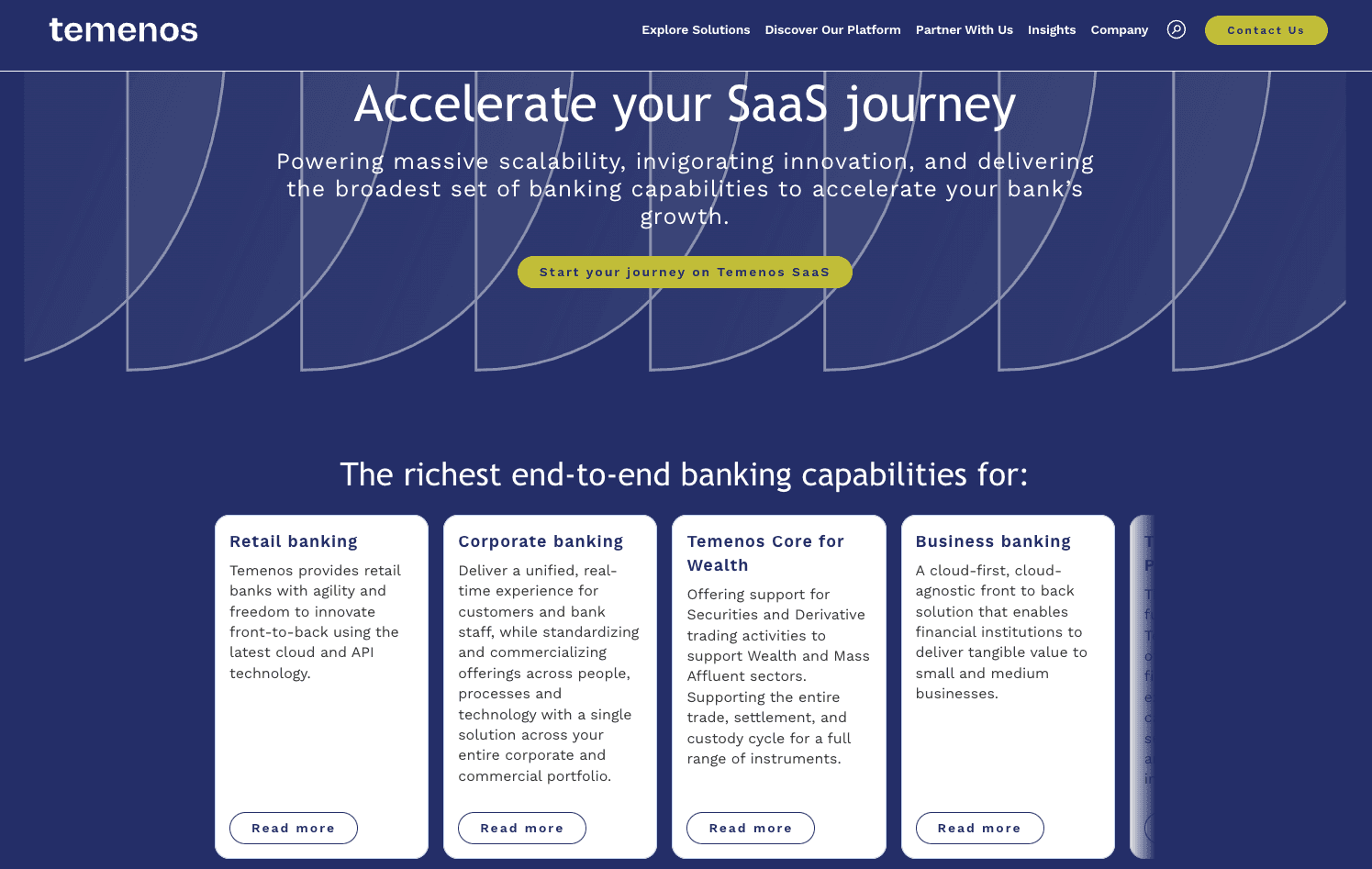
Temenos Infinity enables financial institutions to innovate rapidly by combining a composable banking approach with an open, cloud-agnostic architecture. Its microservices architecture separates front-end distribution from core functions, ensuring quicker time to market. The platform's flexibility helps banks create and deliver personalised, scalable services tailored to customer needs. With seamless integration capabilities, Temenos supports small and large financial institutions in delivering modular solutions, ensuring competitive differentiation while driving operational efficiency. The combination of open APIs and extensive partner ecosystems fosters accelerated innovation.
PriceHubble's availability on Temenos Exchange brings advanced residential real estate insights directly into the digital banking platform. This integration allows financial institutions to offer customers a comprehensive view of their property assets. It also enables them to monitor property value fluctuations, improve mortgage application procedures, and enhance credit risk assessments. By leveraging PriceHubble’s AI-driven insights, banks can strengthen their ESG strategies with features like energy labels and renovation impact analysis. By doing so, they are adding a sustainable dimension to their services.
Our team is happy to show you how your business can enhance its offerings by using PriceHubble insights within Temenos Infinity:
What are the top 10 digital banking platforms for 2025 and beyond?
The right platform is essential for financial institutions to deliver a competitive and compelling digital banking experience. Below, we present the top 10 digital banking platforms for 2025 that stand out for their advanced features, seamless integration, and user-centric approach to banking.
1. Temenos Infinity
Temenos Infinity enables financial institutions to innovate rapidly by combining a composable banking approach with an open, cloud-agnostic architecture. Its microservices architecture separates front-end distribution from core functions, ensuring quicker time to market. The platform's flexibility helps banks create and deliver personalised, scalable services tailored to customer needs. With seamless integration capabilities, Temenos supports small and large financial institutions in delivering modular solutions, ensuring competitive differentiation while driving operational efficiency. The combination of open APIs and extensive partner ecosystems fosters accelerated innovation.
PriceHubble's availability on Temenos Exchange brings advanced residential real estate insights directly into the digital banking platform. This integration allows financial institutions to offer customers a comprehensive view of their property assets. It also enables them to monitor property value fluctuations, improve mortgage application procedures, and enhance credit risk assessments. By leveraging PriceHubble’s AI-driven insights, banks can strengthen their ESG strategies with features like energy labels and renovation impact analysis. By doing so, they are adding a sustainable dimension to their services.
Our team is happy to show you how your business can enhance its offerings by using PriceHubble insights within Temenos Infinity:
What are the top 10 digital banking platforms for 2025 and beyond?
The right platform is essential for financial institutions to deliver a competitive and compelling digital banking experience. Below, we present the top 10 digital banking platforms for 2025 that stand out for their advanced features, seamless integration, and user-centric approach to banking.
1. Temenos Infinity
Temenos Infinity enables financial institutions to innovate rapidly by combining a composable banking approach with an open, cloud-agnostic architecture. Its microservices architecture separates front-end distribution from core functions, ensuring quicker time to market. The platform's flexibility helps banks create and deliver personalised, scalable services tailored to customer needs. With seamless integration capabilities, Temenos supports small and large financial institutions in delivering modular solutions, ensuring competitive differentiation while driving operational efficiency. The combination of open APIs and extensive partner ecosystems fosters accelerated innovation.
PriceHubble's availability on Temenos Exchange brings advanced residential real estate insights directly into the digital banking platform. This integration allows financial institutions to offer customers a comprehensive view of their property assets. It also enables them to monitor property value fluctuations, improve mortgage application procedures, and enhance credit risk assessments. By leveraging PriceHubble’s AI-driven insights, banks can strengthen their ESG strategies with features like energy labels and renovation impact analysis. By doing so, they are adding a sustainable dimension to their services.
Our team is happy to show you how your business can enhance its offerings by using PriceHubble insights within Temenos Infinity:
2. Mambu
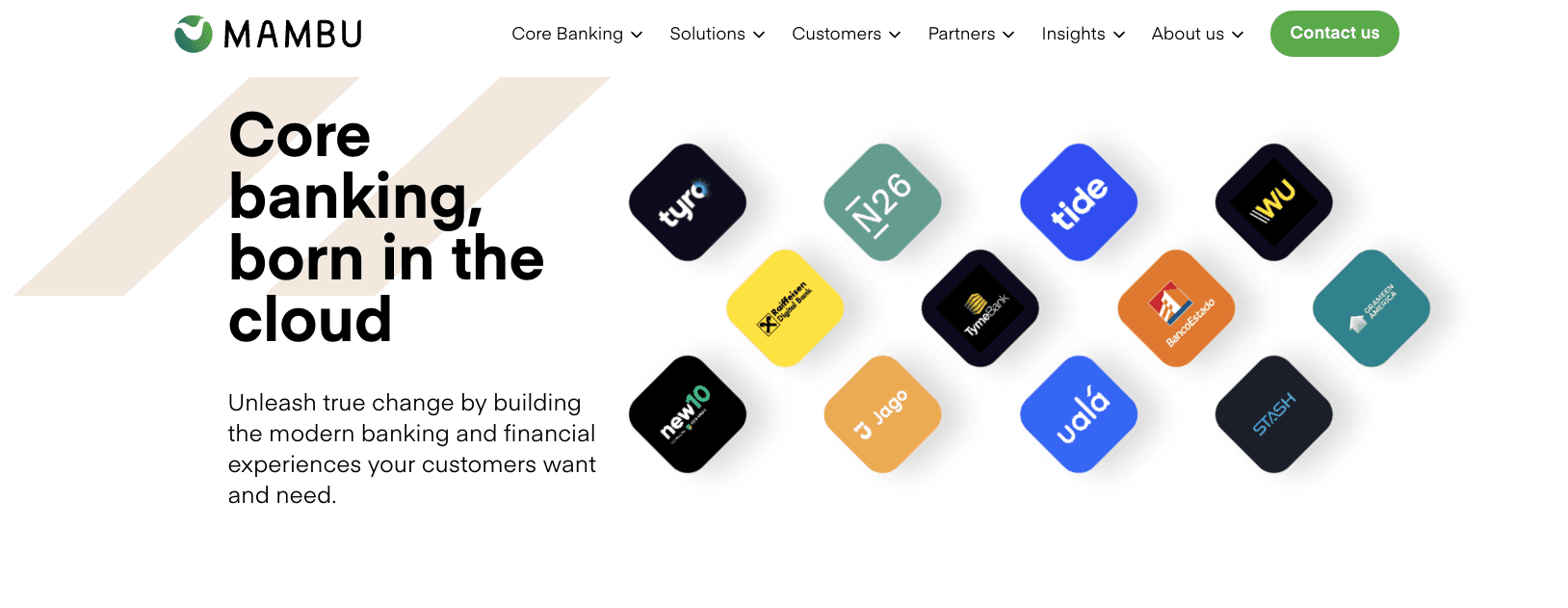
Mambu’s cloud-based platform empowers banks to launch new products quickly, leveraging its modular and composable architecture. Financial institutions, from fintech to legacy banks, benefit from its rapid deployment capabilities and seamless integration with existing systems. Mambu’s flexibility is exemplified by its ability to cater to established institutions and new players, offering scalable solutions for deposits, loans, payments, and more. The SaaS platform helps banks reduce costs, improve operational efficiency, and deliver tailored customer experiences by leveraging advanced technology that adapts to a fast-evolving market.
3. ebankIT Omnichannel Digital Banking Platform
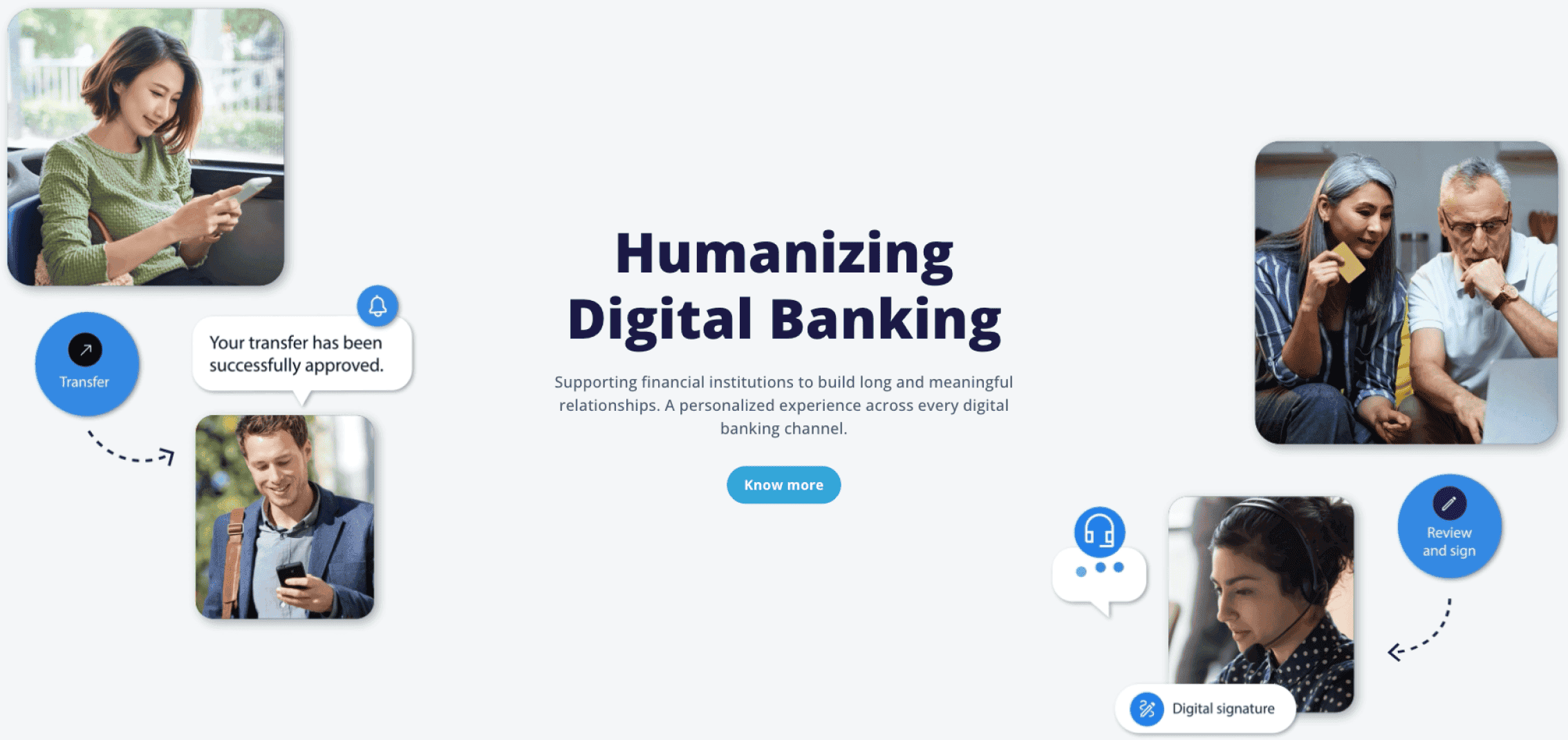
The ebankIT platform accelerates banks’ digital transformation by focusing on seamless omnichannel integration across web, mobile, and wearables. Its modular design ensures flexibility to support retail, corporate, and SME banking needs. By incorporating digital onboarding, targeted marketing tools, and a rich partner ecosystem, ebankIT enhances the efficiency and personalisation of customer journeys. The platform’s focus on proactive, interactive customer experiences helps institutions stay agile and competitive in a rapidly changing digital banking landscape.
4. Backbase Engagement Banking Platform
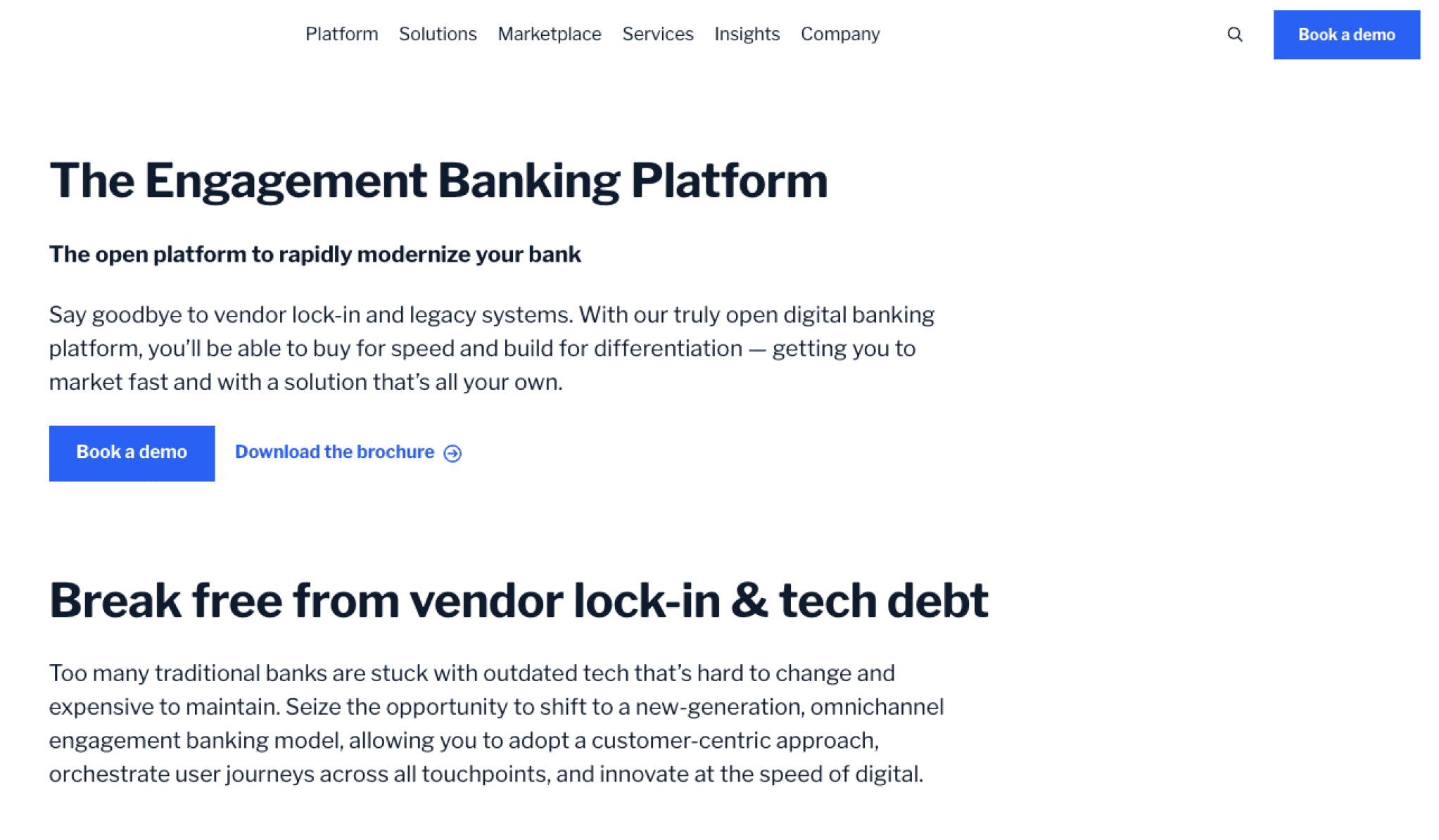
Backbase’s Engagement Banking Platform provides banks with the tools to deliver a unified, customer-centric experience across all digital and physical touchpoints. The platform’s modular design supports flexible, omnichannel banking and offers AI-driven insights to personalise customer services. Backbase integrates seamlessly with fintech solutions, enhancing customer onboarding, servicing, and investing. Its cloud-native architecture ensures scalability and adaptability, while its robust process orchestration tools allow banks to simplify operations and focus on innovation, ensuring long-term competitiveness.
5. Finacle Digital Banking Platform

Finacle’s platform, with its modular architecture, enables banks to digitally transform across multiple segments. It supports comprehensive banking capabilities such as digital onboarding, customer experience personalisation, and risk management. By integrating with third-party solutions via open APIs, Finacle ensures interoperability and promotes innovation. Its cloud deployment capability supports multi-cloud strategies, optimising scalability and cost-efficiency while ensuring compliance. Finacle is an ideal platform for financial institutions looking to stay ahead in an increasingly competitive digital banking environment.
6. nCino Cloud Banking Platform
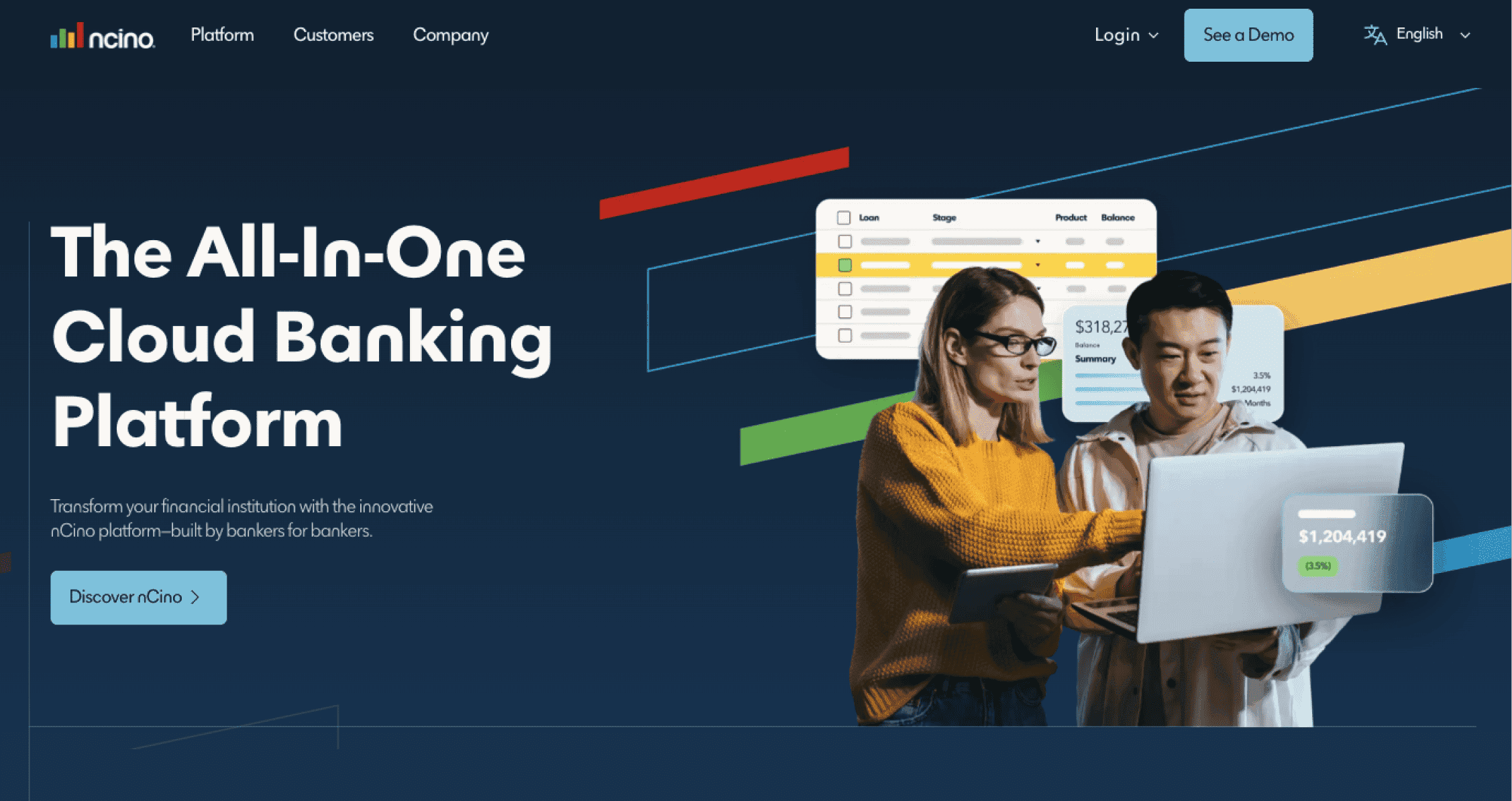
nCino’s platform unifies commercial, small business, consumer, mortgage, and retail banking operations. It streamlines workflows to enhance operational efficiency. Its core functionalities include account opening, loan origination, and credit lifecycle processes. These are enhanced by data-driven insights provided through the nCino IQ tool. Leveraging machine learning and automation, nCino helps banks optimise credit decisions and improve profitability. By integrating diverse data sources, the low-code platform provides actionable insights, enabling banks to remain competitive and efficient.
7. Oracle Banking Digital Experience
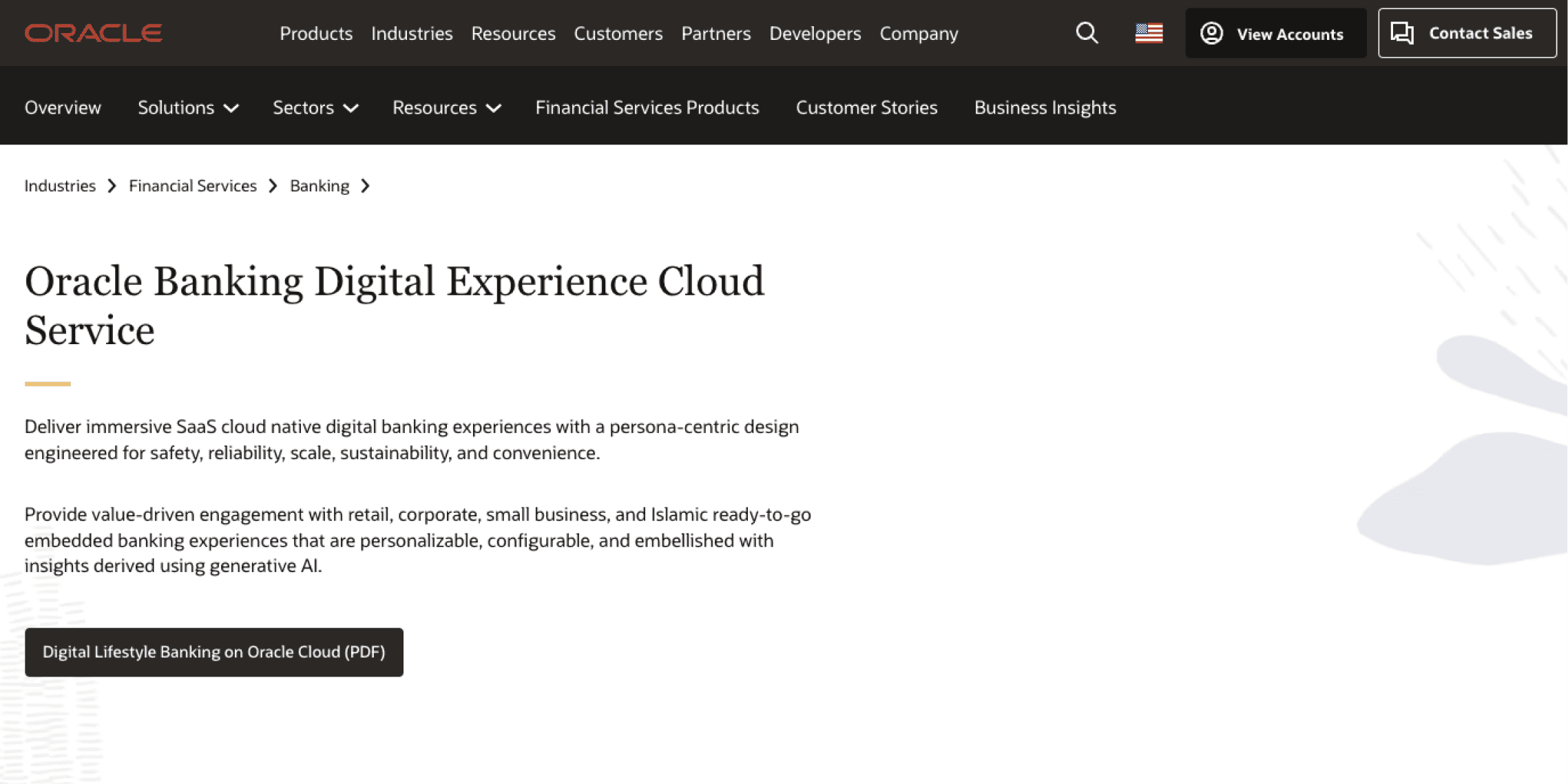
Oracle's OBDX platform drives digital transformation for banks with its cloud-native architecture and omnichannel capabilities. Designed for both retail and corporate banking, OBDX enables seamless, secure digital banking experiences through a self-service portal. The platform’s modular, API-first structure integrates effortlessly with existing core banking systems, while its robust features like digital onboarding and real-time analytics help banks enhance operational efficiency. OBDX is ideal for global institutions, supporting multiple languages, currencies, and entities, making it highly adaptable to diverse business needs.
8. Q2
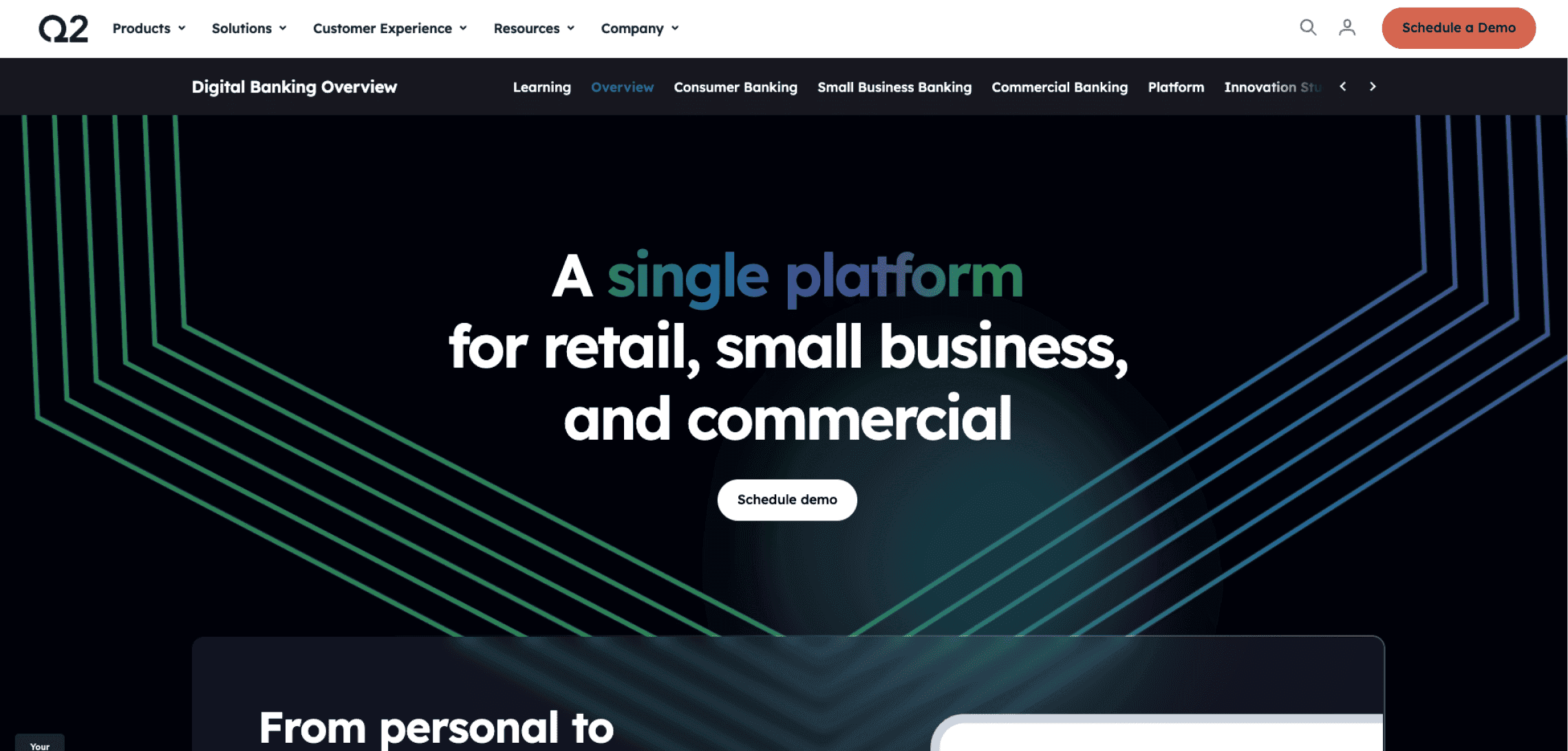
Q2’s digital banking platform provides financial institutions with a flexible, comprehensive solution for retail, commercial, and small business banking. The platform enables seamless integration across web, mobile, and back-office systems while offering dynamic, personalised customer experiences. It emphasises robust security, data-driven product recommendations, and fraud prevention tools to optimise customer interactions. With its open integration framework and cloud-native architecture, Q2 helps banks remain agile, adopting emerging technologies to meet evolving customer expectations.
9. SBS Banking Platform
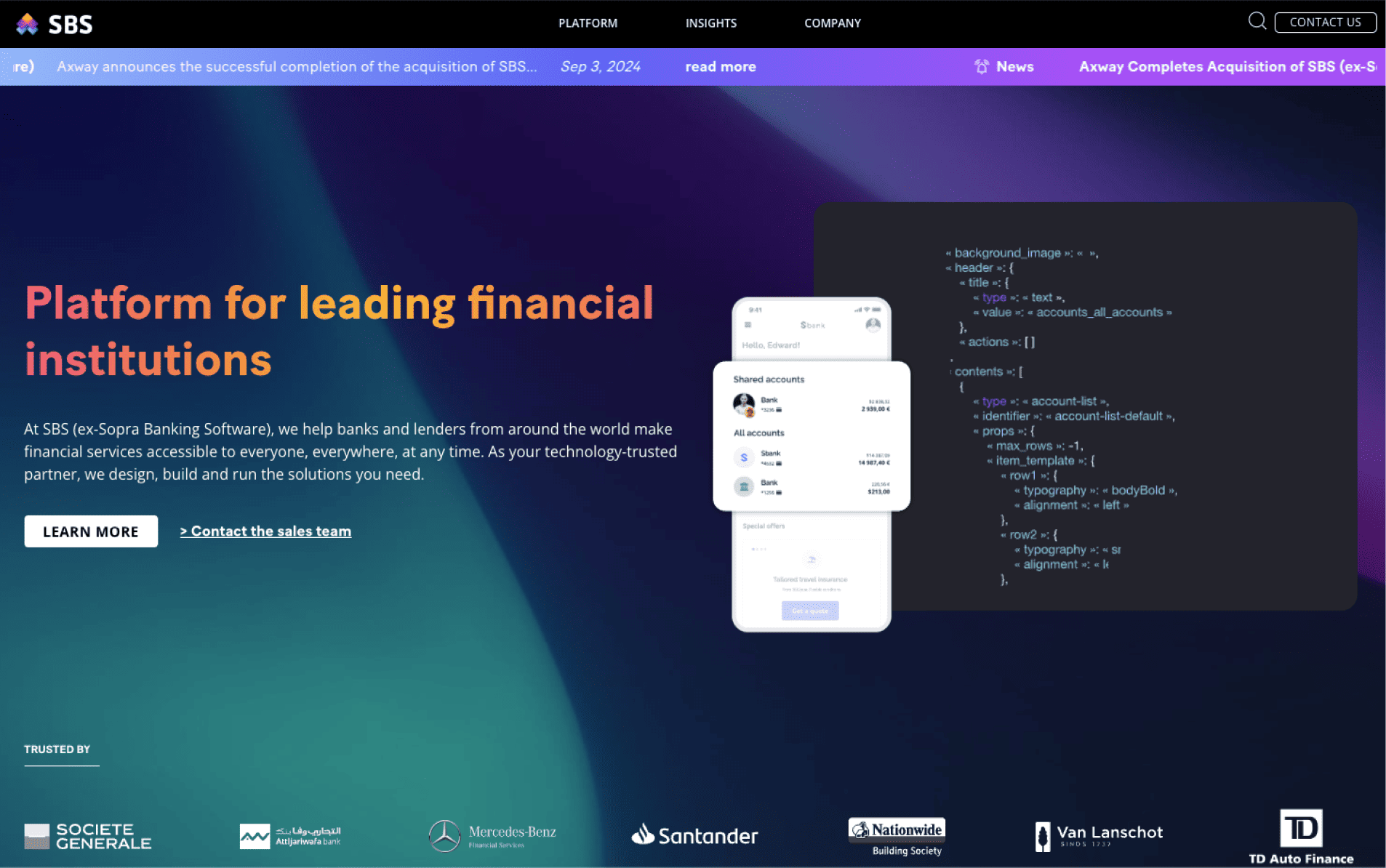
The SBS Banking Platform's API-first, modular design enables banks to streamline operations and deliver personalised experiences. The platform supports diverse banking models—retail, SME, and corporate—and offers seamless integration across key banking functionalities such as lending, payments, and open banking. By leveraging cloud technology and automation, SBS optimises scalability, reduces costs, and improves operational efficiency. It also fosters collaboration with a broad ecosystem of partners, empowering banks to stay competitive and agile as they navigate digital transformation.
10. 10x Banking Platform
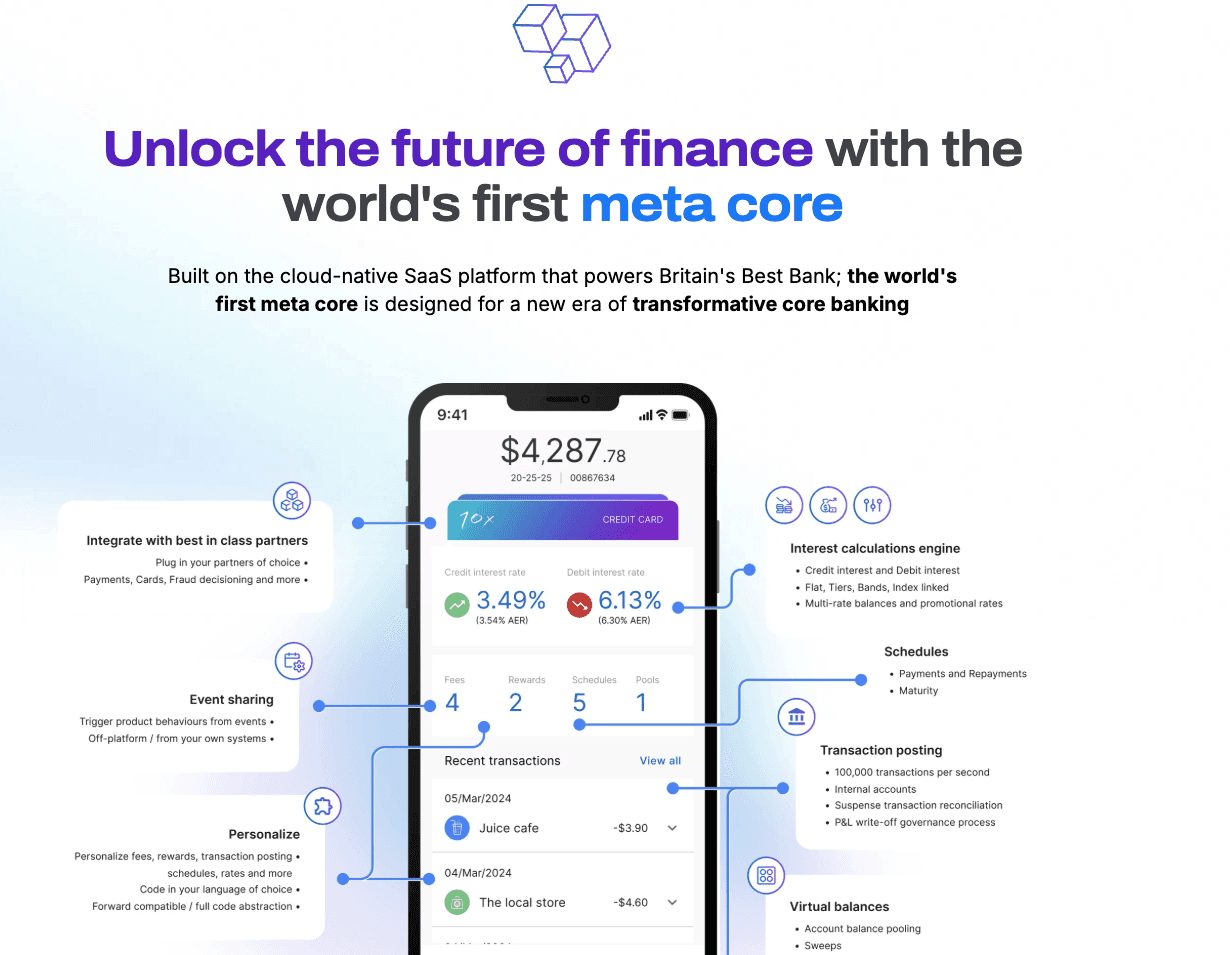
10x Banking Platform revolutionises core banking by offering an open, cloud-native solution that promotes scalability and agility. The platform’s use of microservices and composable banking enables banks to develop flexible, customer-centric banking products that evolve with market demands. 10x helps financial institutions quickly innovate and deliver personalised services while maintaining operational efficiency. By providing seamless, frictionless digital experiences, 10x empowers banks to strengthen customer loyalty and achieve sustainable growth in an ever-changing financial environment.
Real estate insights as a key feature for the future of digital banking
In the fast-paced and competitive world of financial services, innovation is crucial for success. Banks and financial institutions must offer customers unique journeys to maintain their competitive edge. Digital banking platforms are the foundation for modernising service offerings while enhancing customer experience. Banks can build complete end-to-end customer journeys by combining digital banking, advisory, and financing with exclusive real estate insights. By providing a holistic approach, they benefit from efficiency improvements, higher customer loyalty, and revenue growth.
PriceHubble has already assisted several banks and financial institutions embed real estate insights into their digital offerings. Sparkasse Bodensee, for example, managed to offer the first comprehensive 360° ecosystem in Germany, putting their customers' property assets at the forefront. By doing so, the bank generated €1,000,000 in additional revenue:
2. Mambu
Mambu’s cloud-based platform empowers banks to launch new products quickly, leveraging its modular and composable architecture. Financial institutions, from fintech to legacy banks, benefit from its rapid deployment capabilities and seamless integration with existing systems. Mambu’s flexibility is exemplified by its ability to cater to established institutions and new players, offering scalable solutions for deposits, loans, payments, and more. The SaaS platform helps banks reduce costs, improve operational efficiency, and deliver tailored customer experiences by leveraging advanced technology that adapts to a fast-evolving market.
3. ebankIT Omnichannel Digital Banking Platform
The ebankIT platform accelerates banks’ digital transformation by focusing on seamless omnichannel integration across web, mobile, and wearables. Its modular design ensures flexibility to support retail, corporate, and SME banking needs. By incorporating digital onboarding, targeted marketing tools, and a rich partner ecosystem, ebankIT enhances the efficiency and personalisation of customer journeys. The platform’s focus on proactive, interactive customer experiences helps institutions stay agile and competitive in a rapidly changing digital banking landscape.
4. Backbase Engagement Banking Platform
Backbase’s Engagement Banking Platform provides banks with the tools to deliver a unified, customer-centric experience across all digital and physical touchpoints. The platform’s modular design supports flexible, omnichannel banking and offers AI-driven insights to personalise customer services. Backbase integrates seamlessly with fintech solutions, enhancing customer onboarding, servicing, and investing. Its cloud-native architecture ensures scalability and adaptability, while its robust process orchestration tools allow banks to simplify operations and focus on innovation, ensuring long-term competitiveness.
5. Finacle Digital Banking Platform
Finacle’s platform, with its modular architecture, enables banks to digitally transform across multiple segments. It supports comprehensive banking capabilities such as digital onboarding, customer experience personalisation, and risk management. By integrating with third-party solutions via open APIs, Finacle ensures interoperability and promotes innovation. Its cloud deployment capability supports multi-cloud strategies, optimising scalability and cost-efficiency while ensuring compliance. Finacle is an ideal platform for financial institutions looking to stay ahead in an increasingly competitive digital banking environment.
6. nCino Cloud Banking Platform
nCino’s platform unifies commercial, small business, consumer, mortgage, and retail banking operations. It streamlines workflows to enhance operational efficiency. Its core functionalities include account opening, loan origination, and credit lifecycle processes. These are enhanced by data-driven insights provided through the nCino IQ tool. Leveraging machine learning and automation, nCino helps banks optimise credit decisions and improve profitability. By integrating diverse data sources, the low-code platform provides actionable insights, enabling banks to remain competitive and efficient.
7. Oracle Banking Digital Experience
Oracle's OBDX platform drives digital transformation for banks with its cloud-native architecture and omnichannel capabilities. Designed for both retail and corporate banking, OBDX enables seamless, secure digital banking experiences through a self-service portal. The platform’s modular, API-first structure integrates effortlessly with existing core banking systems, while its robust features like digital onboarding and real-time analytics help banks enhance operational efficiency. OBDX is ideal for global institutions, supporting multiple languages, currencies, and entities, making it highly adaptable to diverse business needs.
8. Q2
Q2’s digital banking platform provides financial institutions with a flexible, comprehensive solution for retail, commercial, and small business banking. The platform enables seamless integration across web, mobile, and back-office systems while offering dynamic, personalised customer experiences. It emphasises robust security, data-driven product recommendations, and fraud prevention tools to optimise customer interactions. With its open integration framework and cloud-native architecture, Q2 helps banks remain agile, adopting emerging technologies to meet evolving customer expectations.
9. SBS Banking Platform
The SBS Banking Platform's API-first, modular design enables banks to streamline operations and deliver personalised experiences. The platform supports diverse banking models—retail, SME, and corporate—and offers seamless integration across key banking functionalities such as lending, payments, and open banking. By leveraging cloud technology and automation, SBS optimises scalability, reduces costs, and improves operational efficiency. It also fosters collaboration with a broad ecosystem of partners, empowering banks to stay competitive and agile as they navigate digital transformation.
10. 10x Banking Platform
10x Banking Platform revolutionises core banking by offering an open, cloud-native solution that promotes scalability and agility. The platform’s use of microservices and composable banking enables banks to develop flexible, customer-centric banking products that evolve with market demands. 10x helps financial institutions quickly innovate and deliver personalised services while maintaining operational efficiency. By providing seamless, frictionless digital experiences, 10x empowers banks to strengthen customer loyalty and achieve sustainable growth in an ever-changing financial environment.
Real estate insights as a key feature for the future of digital banking
In the fast-paced and competitive world of financial services, innovation is crucial for success. Banks and financial institutions must offer customers unique journeys to maintain their competitive edge. Digital banking platforms are the foundation for modernising service offerings while enhancing customer experience. Banks can build complete end-to-end customer journeys by combining digital banking, advisory, and financing with exclusive real estate insights. By providing a holistic approach, they benefit from efficiency improvements, higher customer loyalty, and revenue growth.
PriceHubble has already assisted several banks and financial institutions embed real estate insights into their digital offerings. Sparkasse Bodensee, for example, managed to offer the first comprehensive 360° ecosystem in Germany, putting their customers' property assets at the forefront. By doing so, the bank generated €1,000,000 in additional revenue:
2. Mambu
Mambu’s cloud-based platform empowers banks to launch new products quickly, leveraging its modular and composable architecture. Financial institutions, from fintech to legacy banks, benefit from its rapid deployment capabilities and seamless integration with existing systems. Mambu’s flexibility is exemplified by its ability to cater to established institutions and new players, offering scalable solutions for deposits, loans, payments, and more. The SaaS platform helps banks reduce costs, improve operational efficiency, and deliver tailored customer experiences by leveraging advanced technology that adapts to a fast-evolving market.
3. ebankIT Omnichannel Digital Banking Platform
The ebankIT platform accelerates banks’ digital transformation by focusing on seamless omnichannel integration across web, mobile, and wearables. Its modular design ensures flexibility to support retail, corporate, and SME banking needs. By incorporating digital onboarding, targeted marketing tools, and a rich partner ecosystem, ebankIT enhances the efficiency and personalisation of customer journeys. The platform’s focus on proactive, interactive customer experiences helps institutions stay agile and competitive in a rapidly changing digital banking landscape.
4. Backbase Engagement Banking Platform
Backbase’s Engagement Banking Platform provides banks with the tools to deliver a unified, customer-centric experience across all digital and physical touchpoints. The platform’s modular design supports flexible, omnichannel banking and offers AI-driven insights to personalise customer services. Backbase integrates seamlessly with fintech solutions, enhancing customer onboarding, servicing, and investing. Its cloud-native architecture ensures scalability and adaptability, while its robust process orchestration tools allow banks to simplify operations and focus on innovation, ensuring long-term competitiveness.
5. Finacle Digital Banking Platform
Finacle’s platform, with its modular architecture, enables banks to digitally transform across multiple segments. It supports comprehensive banking capabilities such as digital onboarding, customer experience personalisation, and risk management. By integrating with third-party solutions via open APIs, Finacle ensures interoperability and promotes innovation. Its cloud deployment capability supports multi-cloud strategies, optimising scalability and cost-efficiency while ensuring compliance. Finacle is an ideal platform for financial institutions looking to stay ahead in an increasingly competitive digital banking environment.
6. nCino Cloud Banking Platform
nCino’s platform unifies commercial, small business, consumer, mortgage, and retail banking operations. It streamlines workflows to enhance operational efficiency. Its core functionalities include account opening, loan origination, and credit lifecycle processes. These are enhanced by data-driven insights provided through the nCino IQ tool. Leveraging machine learning and automation, nCino helps banks optimise credit decisions and improve profitability. By integrating diverse data sources, the low-code platform provides actionable insights, enabling banks to remain competitive and efficient.
7. Oracle Banking Digital Experience
Oracle's OBDX platform drives digital transformation for banks with its cloud-native architecture and omnichannel capabilities. Designed for both retail and corporate banking, OBDX enables seamless, secure digital banking experiences through a self-service portal. The platform’s modular, API-first structure integrates effortlessly with existing core banking systems, while its robust features like digital onboarding and real-time analytics help banks enhance operational efficiency. OBDX is ideal for global institutions, supporting multiple languages, currencies, and entities, making it highly adaptable to diverse business needs.
8. Q2
Q2’s digital banking platform provides financial institutions with a flexible, comprehensive solution for retail, commercial, and small business banking. The platform enables seamless integration across web, mobile, and back-office systems while offering dynamic, personalised customer experiences. It emphasises robust security, data-driven product recommendations, and fraud prevention tools to optimise customer interactions. With its open integration framework and cloud-native architecture, Q2 helps banks remain agile, adopting emerging technologies to meet evolving customer expectations.
9. SBS Banking Platform
The SBS Banking Platform's API-first, modular design enables banks to streamline operations and deliver personalised experiences. The platform supports diverse banking models—retail, SME, and corporate—and offers seamless integration across key banking functionalities such as lending, payments, and open banking. By leveraging cloud technology and automation, SBS optimises scalability, reduces costs, and improves operational efficiency. It also fosters collaboration with a broad ecosystem of partners, empowering banks to stay competitive and agile as they navigate digital transformation.
10. 10x Banking Platform
10x Banking Platform revolutionises core banking by offering an open, cloud-native solution that promotes scalability and agility. The platform’s use of microservices and composable banking enables banks to develop flexible, customer-centric banking products that evolve with market demands. 10x helps financial institutions quickly innovate and deliver personalised services while maintaining operational efficiency. By providing seamless, frictionless digital experiences, 10x empowers banks to strengthen customer loyalty and achieve sustainable growth in an ever-changing financial environment.
Real estate insights as a key feature for the future of digital banking
In the fast-paced and competitive world of financial services, innovation is crucial for success. Banks and financial institutions must offer customers unique journeys to maintain their competitive edge. Digital banking platforms are the foundation for modernising service offerings while enhancing customer experience. Banks can build complete end-to-end customer journeys by combining digital banking, advisory, and financing with exclusive real estate insights. By providing a holistic approach, they benefit from efficiency improvements, higher customer loyalty, and revenue growth.
PriceHubble has already assisted several banks and financial institutions embed real estate insights into their digital offerings. Sparkasse Bodensee, for example, managed to offer the first comprehensive 360° ecosystem in Germany, putting their customers' property assets at the forefront. By doing so, the bank generated €1,000,000 in additional revenue:
Are you interested in leveraging our real estate insights to improve customer engagement and retention and generate new revenue streams? We are looking forward to assisting you:
Are you interested in leveraging our real estate insights to improve customer engagement and retention and generate new revenue streams? We are looking forward to assisting you:
Are you interested in leveraging our real estate insights to improve customer engagement and retention and generate new revenue streams? We are looking forward to assisting you:
Request a demo
We will get back to you quickly.
We look forward to speaking with you.
Thank you!
We will get back to you within 24 business hours.

Thank you!
We will get back to you within 24 business hours.